Blog · Bookkeeping & accounting
What a church audit is, and how to run one
June 27, 2026 · By Benjamin Reinke
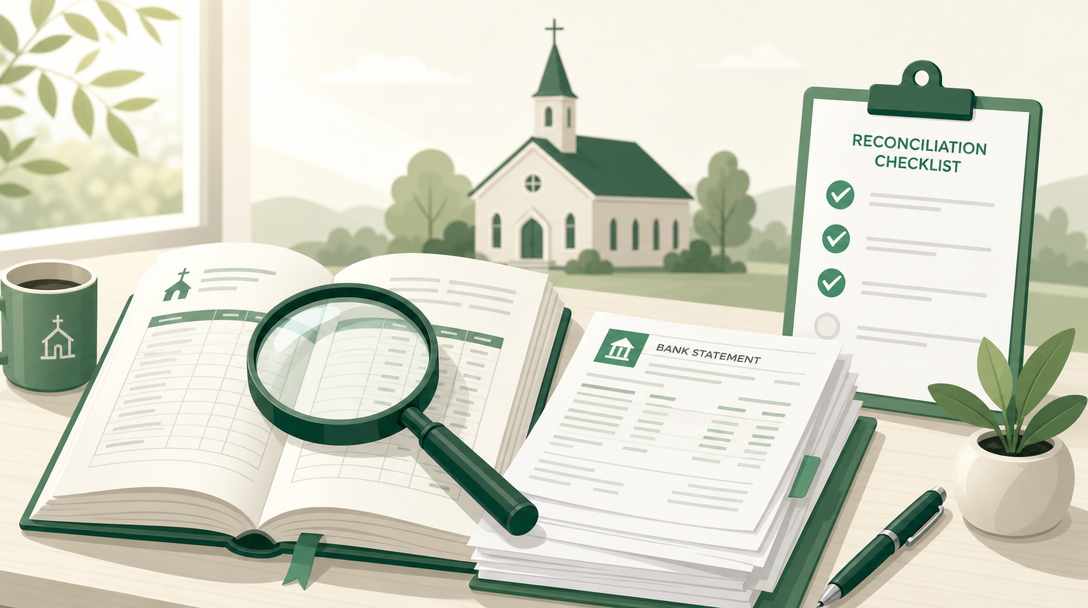
Short answer: A church audit is an independent review of a church’s financial records, internal controls, and account balances to confirm the money is accurate, properly handled, and used as intended. Most churches aren’t legally required to have one, but many do it every year for accountability — to protect both the congregation’s trust and the people who handle the money. “Church audit” can mean two very different things: a voluntary accountability audit the church arranges itself, or an IRS audit, which is rare and governed by special rules that make churches harder to audit than any other organization.
What a church audit checks
A church audit looks at whether the financial records tell the truth and whether the systems around them are sound. A thorough one covers five areas:
- Documentation — bank statements, contribution records, invoices, payroll, and minutes that authorize spending.
- Internal controls — whether duties are separated so no one person controls a transaction from start to finish.
- Transaction testing — tracing a sample of gifts and expenses from the record back to the source document.
- Account balances — confirming the books match the bank, and that each fund’s balance is right.
- Donor records — checking that restricted gifts went to their purpose and that giving statements are accurate.
The goal isn’t to accuse anyone. It’s to catch honest errors, confirm the church financial statements are reliable, and remove the temptation and suspicion that come with money nobody checks.
Internal vs. external church audits
There are two ways to get a church audit done, and they’re very different in cost and weight.
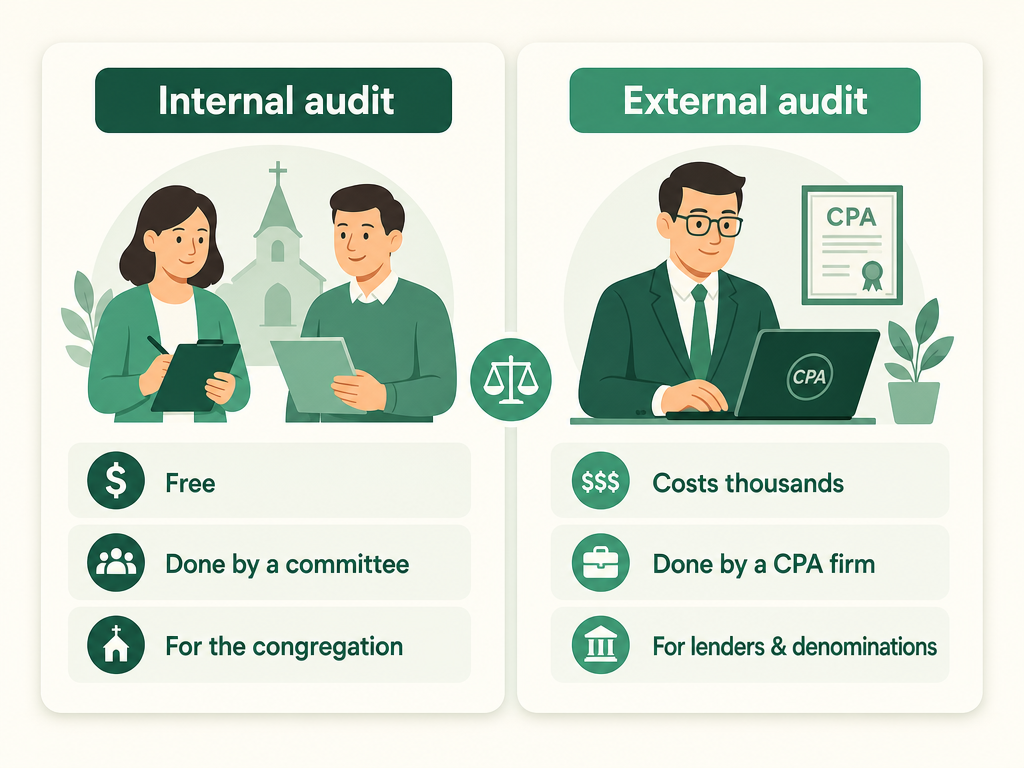
| Internal audit | External (independent) audit | |
|---|---|---|
| Who does it | A committee of qualified volunteers, separate from the treasurer | An outside CPA firm |
| Cost | Essentially free | Several thousand dollars and up |
| Carries weight with | The congregation and board | Lenders, denominations, grant-makers |
| Best for | Annual accountability at most churches | Loans, large budgets, or when bylaws require it |
Most small churches run a yearly internal audit — a couple of members who don’t handle the money review the books against the bank and the controls. A full external audit by a CPA is the gold standard, but it’s expensive, so churches usually only commission one when a lender, denomination, or their own bylaws require it.
The church audit process, step by step
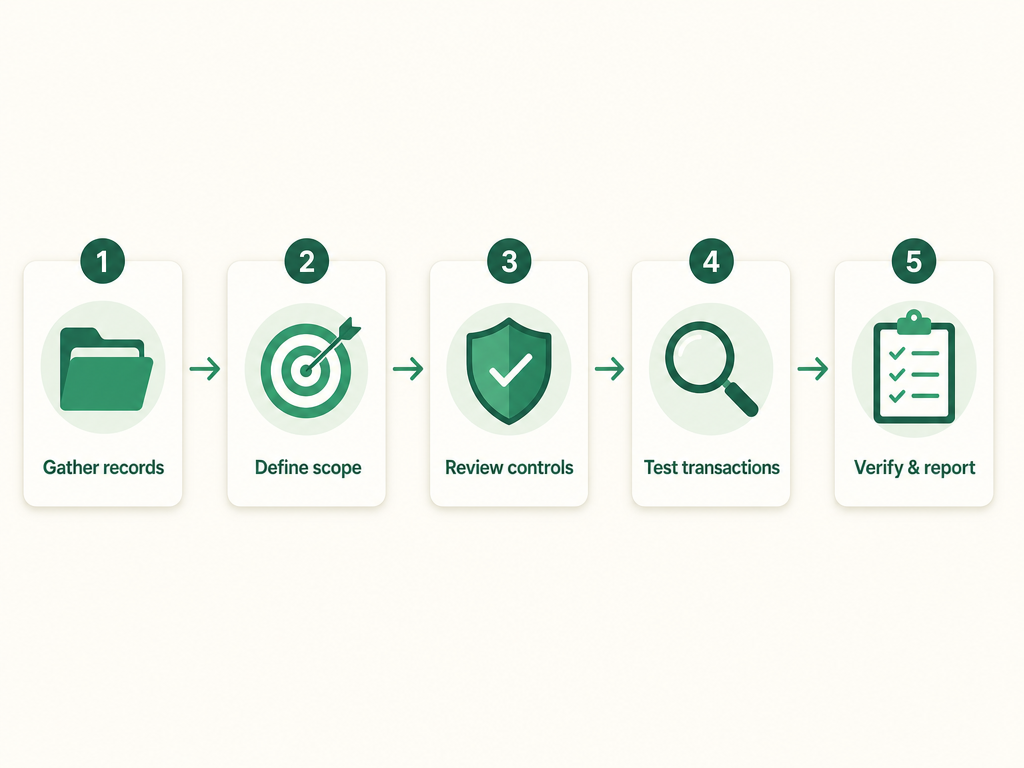
Whether a committee or a CPA runs it, a church audit follows the same path:
- Gather the records. Pull the year’s bank statements, giving records, invoices, payroll, and board minutes.
- Define the scope. Agree with leadership on what the audit covers and the period it spans.
- Review internal controls. Check that counting, recording, and reconciling are done by different people.
- Test transactions. Trace a sample of contributions and expenses from the books to the source documents and back.
- Verify balances and report. Confirm the books reconcile to the bank, then write up findings and recommendations for the board.
How much a church audit costs
A church audit’s cost depends entirely on which kind you run. An internal audit by volunteers is essentially free — it costs time, not money. A full external audit by a CPA firm is the expensive end, commonly several thousand dollars and rising with the church’s size and complexity. In between sit two cheaper CPA engagements many churches use instead of a full audit:
- A review — limited assurance, less testing, lower cost.
- A compilation — the CPA assembles your statements without testing them, the cheapest CPA option.
For most small and midsize churches, an annual internal audit plus clean monthly church bookkeeping is enough, with a CPA review or audit reserved for when an outside party requires it.
The IRS church audit — a different thing, with special protection
When people hear “the church is being audited,” they often picture the IRS. That’s a separate matter, and churches get protections no other organization has. Under the Church Audit Procedures Act (Internal Revenue Code §7611), the IRS can’t just open an audit of a church. It must first have a reasonable belief, supported by a written notice signed by a high-level Treasury official, that the church may not qualify for exemption or may owe tax (IRS — church audits, reasonable belief requirement). For how that process actually works — what triggers it, the two-step inquiry, and the time limits — see the full guide to whether the IRS audits churches.
In practice, IRS church audits are rare, and they’re triggered by specific red flags — unreported unrelated business income, private benefit, or political campaign activity — not by routine operations. Keeping clean books and staying within your exempt purpose is what keeps you clear; for the broader picture, see whether churches pay taxes.
A simple church audit checklist
For a yearly internal audit, walk this list:
- Reconcile every bank and credit-card account to the books for all twelve months.
- Confirm two unrelated people counted each offering and signed the count.
- Trace a sample of contributions from the count sheet to the deposit to the books.
- Trace a sample of expenses to an invoice and an approval.
- Verify restricted-fund money was spent only on its purpose.
- Check that payroll, clergy housing, and 1099s were handled correctly.
- Confirm giving statements match recorded contributions.
- Review who has access to bank accounts, checks, and the accounting system.
FAQ
What does a church audit consist of? A review of the church’s financial records, internal controls, transactions, account balances, and donor records — confirming the books are accurate, the money was handled by more than one person, and restricted gifts went to their purpose.
How much does an audit cost for a church? An internal audit by volunteers is essentially free. A full external audit by a CPA firm commonly runs into the thousands and scales with the church’s size. A CPA review or compilation costs less than a full audit and is enough for many churches.
What does it mean when a church is being audited? Usually it means a voluntary, internal accountability audit — not the IRS. An actual IRS church audit is rare and, under IRC §7611, requires the IRS to have a documented reasonable belief before it can even begin.
What is the audit checklist for a church? Reconcile all accounts, confirm two-person offering counts, trace a sample of gifts and expenses to source documents, verify restricted funds, check payroll and clergy taxes, and confirm giving statements match the records.
How often should a church be audited? There’s no law requiring most churches to be audited on a set schedule — a church isn’t required to file a Form 990 or undergo a government audit. As good stewardship, though, an independent review once a year is the common practice: a finance-committee member or an outside set of eyes checks the books annually, with a more formal CPA audit reserved for larger budgets, a lender’s requirement, or a denomination’s rule. The point isn’t frequency for its own sake — it’s that someone outside the bookkeeping seat reviews the whole thing on a regular schedule.
How do you conduct a church audit? For a small-church internal review, work through the books in order: reconcile every bank and credit-card account to the records for all twelve months, then trace a sample of gifts from the count sheet to the deposit to the books, and a sample of expenses to an invoice and an approval. Verify each restricted fund was spent only on its stated purpose, check that payroll, clergy housing, and 1099s were handled correctly, and confirm the giving statements match recorded contributions. Two members who don’t handle the money do the work and write up findings for the board.
Do a church’s accounts have to be audited? For most churches, no — a church usually isn’t a Form 990 filer and faces no general legal requirement to be audited. An audit becomes mandatory only when an outside party demands it: a denomination’s bylaws, a lender financing a building, a grant-maker, or in a few cases a state’s charitable-solicitation rules. Even without a requirement, a yearly review is sound stewardship and protects the people who handle the money.
Should a pastor control the church finances? No. Good practice keeps spiritual authority and financial control in separate hands, so the person who leads the congregation isn’t also the one counting, recording, and spending the money end to end. The board, a church treasurer, and an independent annual review supply the checks — separation of duties is the single best defense against church embezzlement and against the suspicion that falls on money one person controls alone.
Who does church audits, and what does a church auditor do? For a small church, the auditor is usually an internal finance-committee member — someone qualified who doesn’t handle the day-to-day money — who reviews the records, tests a sample of transactions, and reports to the board. For a larger budget, or when a lender or denomination requires it, an outside CPA firm performs the audit and issues a formal opinion. In both cases the job is the same: confirm the books are accurate, the controls are sound, and the funds went where they were meant to.
What is the Church Audit Procedures Act? It’s the part of the tax code (Internal Revenue Code §7611) that limits how the IRS can audit a church. The IRS must have a reasonable belief — documented and approved by a high-level Treasury official — that the church may owe tax or not qualify for exemption before it can begin. This governs IRS audits only; it has nothing to do with the voluntary financial review a church arranges for its own accountability.
Vestrybooks keeps a church audit-ready year-round — reconciled books, fund balances, and a clean trail from every gift to its deposit. See how it works.
This article is general information for church treasurers, not professional tax or legal advice. For your church's situation, consult a qualified accountant or attorney.
Church accounting a volunteer can actually do.
Vestrybooks is church accounting + giving for the volunteer treasurer — fund tracking, one-click year-end statements, and online giving with $0 taken from every gift.
A real free plan · no credit card · your data stays yours