Blog · Budgeting
Average church budget by size, by the numbers
June 27, 2026 · By Benjamin Reinke
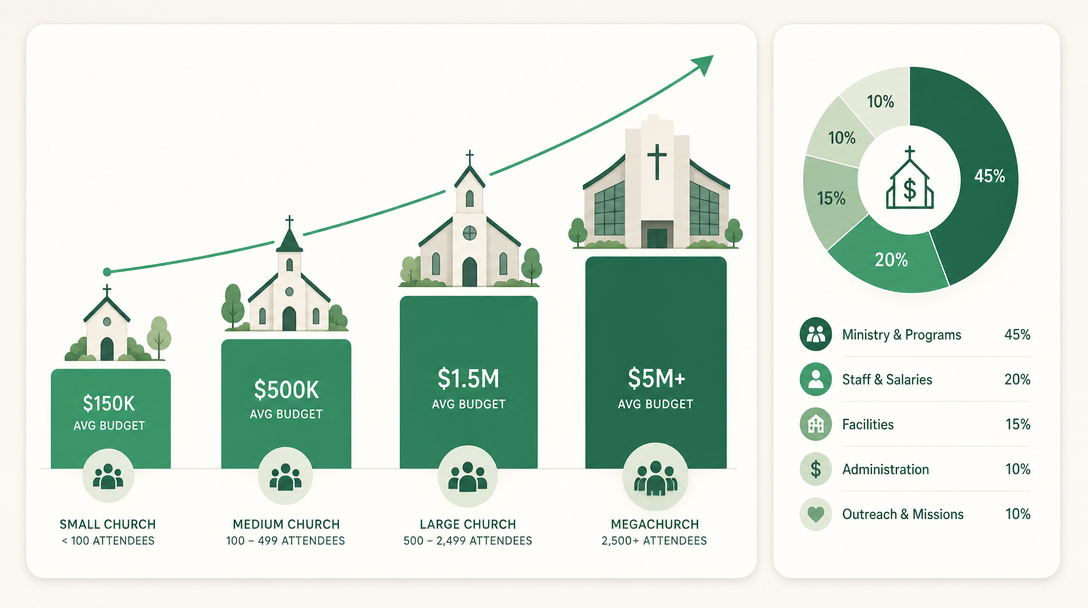
The short version: Most US churches run far smaller budgets than people assume. The typical congregation takes in around $165,000 a year and spends about $160,000, according to the Faith Communities Today research, and the smallest churches — under 50 attendees — often bring in well under $100,000. Budgets scale steeply with size: by one report the median US church budget is roughly $300,000, small churches (under ~200) average around $150,000, and the largest churches run into the millions. Wherever a church lands, the spending pattern is remarkably consistent — about half goes to personnel. Below are the benchmark figures by size, each tied to a source, so you can see where your church sits.
How to read these numbers: church-budget figures come from research bodies (Faith Communities Today / Hartford Institute, Lifeway Research) and industry analyses (ChurchSalary, Vanderbloemen). Samples and definitions differ — “budget,” “income,” and “spending” aren’t always the same line — so treat these as benchmarks to orient by, not exact targets. We’ve attributed each.
Average church budget by size
A church’s budget tracks its size almost directly, because nearly all of a church’s income is voluntary giving from the people in the seats. The figures below are medians and averages from research and industry reports — wide ranges sit behind every one.
| Church size | Typical annual budget | Source / note |
|---|---|---|
| Smallest (under ~50 attendance) | Roughly $60k–$92k income (varies by tradition) | Median income ~$61k evangelical, ~$92k mainline, ~$65k Catholic |
| Typical US congregation | ~$165k income / $160k spending | Faith Communities Today |
| Median US church | ~$300k | By one aggregate report |
| Small church (under ~200) | ~$150k average | By one aggregate report |
| Largest (2,000+) | $5M+ | Megachurches run into the millions |
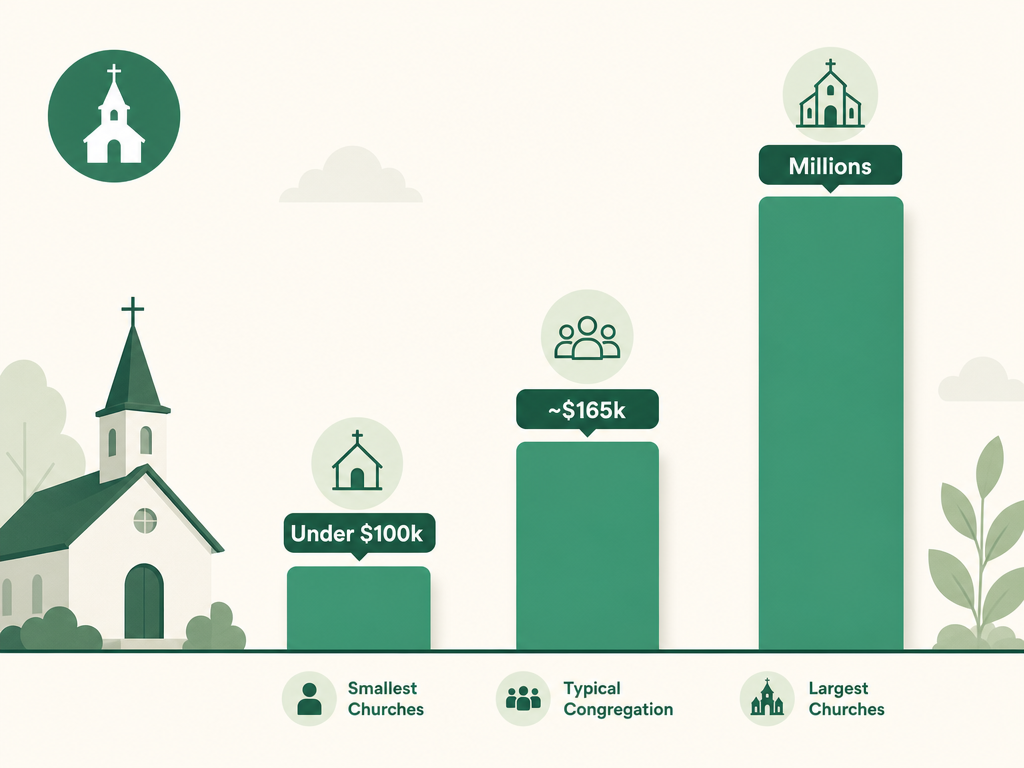
The headline most small-church leaders find reassuring: the average church is not a megachurch. The typical congregation operates on a budget in the low six figures, and the under-50-attendance church often runs on $60,000–$90,000 a year. If your church’s budget feels small, it’s probably normal.
Income vs. spending — most churches run close to even
Churches tend to spend almost exactly what they take in, because there’s rarely a surplus to bank. Faith Communities Today’s figures — about $165,000 in, $160,000 out for the typical church — capture that reality: a thin margin, no big cushion. That’s why a giving dip hits a church budget fast, and why building even a small operating reserve matters. Income itself has been under pressure: Lifeway Research found church income rising in recent years but trailing inflation, so many churches are running harder to stay even.
If you’re building or pressure-testing your own plan, start from the church budget guide and a real sample church budget with line-item dollar figures.
Where the money goes — about half to personnel
Whatever the size, the spending split is strikingly consistent, and personnel is always the biggest piece. The benchmark numbers:
- Personnel (salaries + benefits): ~49% of the budget on average, typically landing between 47% and 52%, and trending higher as the budget grows (ChurchSalary). By one breakdown, staff salaries and benefits run about 43% and buildings/operations about 26%.
- Facilities (building, utilities, upkeep): roughly a quarter of the budget.
- Ministry, missions, and everything else: the remainder.
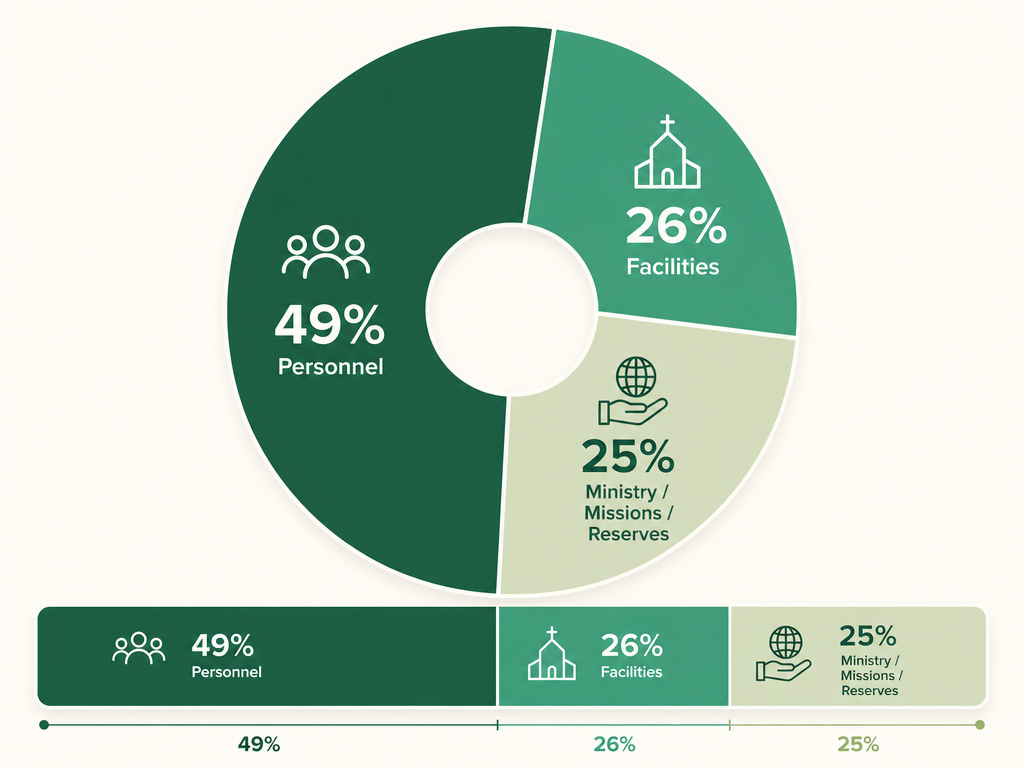
That ~50% personnel figure is the single most useful benchmark for a small church: if your salaries and benefits are creeping past half the budget, the rest of the ministry gets squeezed. The full set of healthy ratios — and why personnel is the line to watch — is in church budget percentages.
What the averages mean for your church
The benchmarks are a mirror, not a target. Three things to take from them:
- Right-size your expectations. Most churches run on a low-six-figure budget or less. Comparing yourself to a megachurch’s millions isn’t useful; compare to churches your size.
- Watch the personnel line. Around half the budget to staff is normal and sustainable; well above that, and ministry and facilities get starved.
- Budget income conservatively and build a reserve. Most churches run close to even with income trailing inflation, so a thin margin is the norm — plan for it. Giving is also concentrated among a minority of households, which the church giving statistics lay out.
FAQ
What is the average church budget? The typical US church takes in about $165,000 a year and spends roughly $160,000, per Faith Communities Today, though figures vary widely by size and source. By one aggregate report the median US church budget is around $300,000, pulled up by larger churches — the most common church runs on a low-six-figure budget, and the smallest (under 50 attendance) often on $60,000–$90,000.
How much should a small church budget be? There’s no single right number — a small church’s budget is whatever its giving can sustainably support, commonly in the tens of thousands to low six figures. What matters more than the total is the split: aim to keep personnel costs around half, with the rest across facilities, ministry, missions, and a reserve. Build the plan from your own giving history, not a national average.
What percentage of a church budget should go to salaries? About half. Churches spend an average of roughly 49% of the budget on personnel (salaries and benefits), typically between 47% and 52%, trending higher as the budget grows. Keeping it at or under about half leaves enough for facilities, ministry, and missions.
Do most churches run a surplus? Rarely. Most churches spend nearly all of what they take in — the typical church’s income and expenses are within a few percent of each other — so there’s little built-in cushion. With income trailing inflation in recent years, building even a small operating reserve is one of the most useful things a church budget can do.
Vestrybooks shows a church its real income, spending, and budget-versus-actual by fund, so you can see exactly where you stand against these benchmarks instead of guessing. See how it works.
Figures are drawn from Faith Communities Today / Hartford Institute, Lifeway Research, and industry analyses (ChurchSalary, Vanderbloemen); they vary by sample and definition. This is general information, not financial advice.
This article is general information for church treasurers, not professional tax or legal advice. For your church's situation, consult a qualified accountant or attorney.
Church accounting a volunteer can actually do.
Vestrybooks is church accounting + giving for the volunteer treasurer — fund tracking, one-click year-end statements, and online giving with $0 taken from every gift.
A real free plan · no credit card · your data stays yours