Blog · Budgeting
Church budget percentages: a healthy breakdown
June 26, 2026 · By Benjamin Reinke
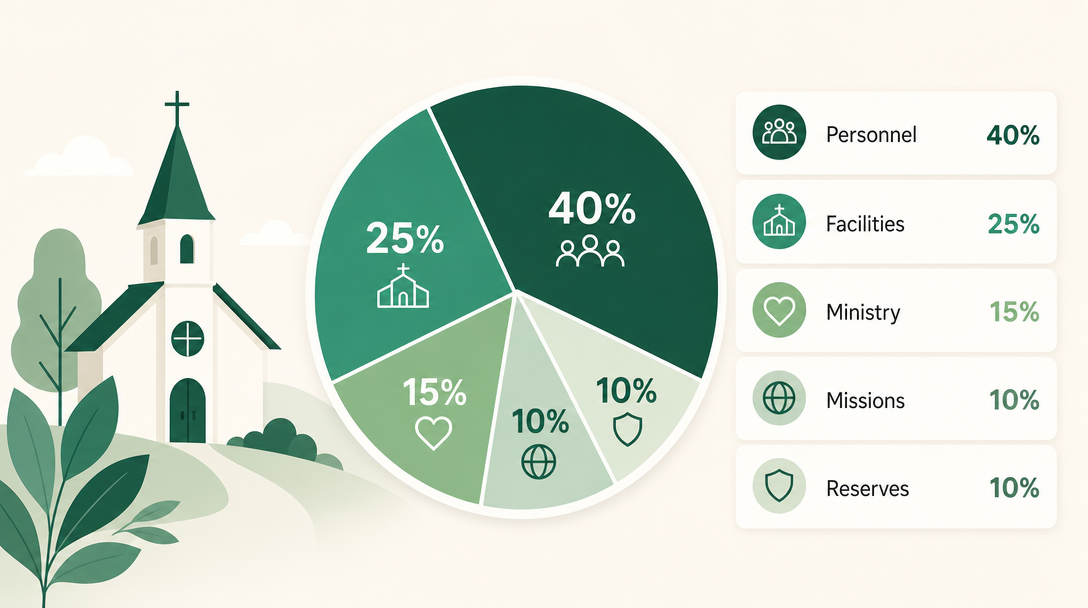
Short answer: There’s no IRS-mandated split, but most healthy church budgets land in similar ranges: roughly 45–55% personnel, 25–30% facilities and operations, 10–20% ministry and programs, about 10% missions and outreach, and a few percent to reserves. The most-watched guideline is keeping personnel under about half the budget so ministry doesn’t get crowded out. The personal-finance “rules” people ask about — 50/30/20, 70-10-10-10 — are for household budgets, not churches.
A healthy church budget breakdown
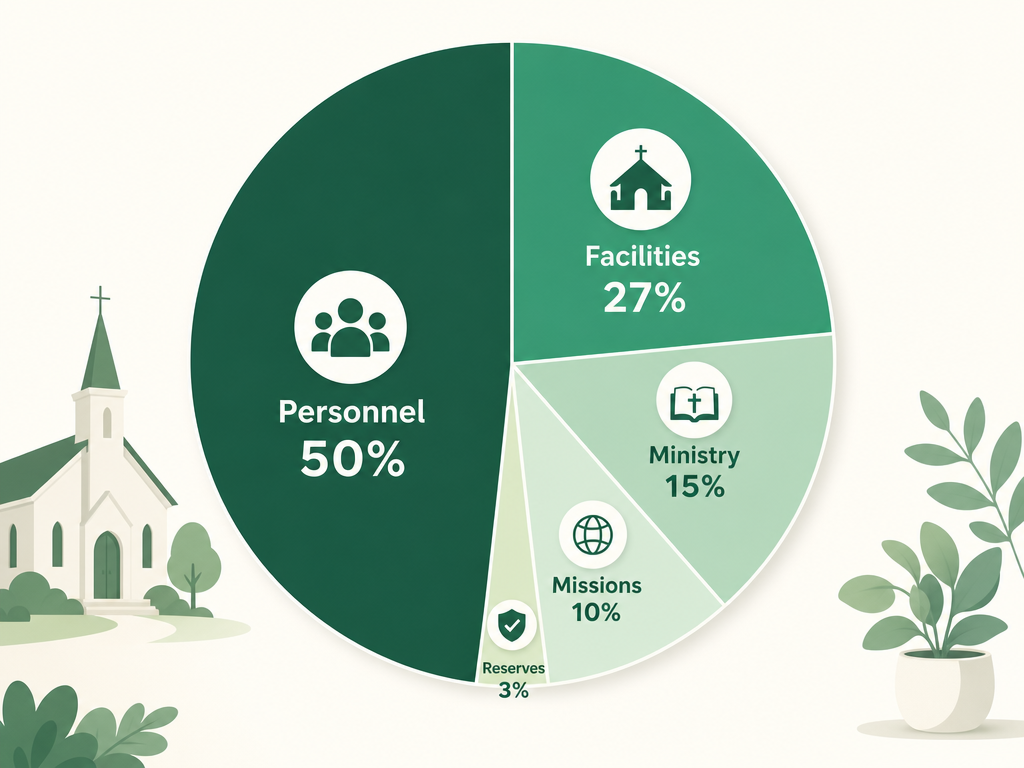
A healthy church budget commonly lands in these ranges — guidelines church-finance advisors recommend, not hard rules — and a church plant, an established church, and a church with a school will all look different, as does the average church budget at each size:
| Category | Typical range |
|---|---|
| Personnel (salaries, housing allowance, benefits) | 45–55% |
| Facilities and operations (mortgage, utilities, insurance, upkeep) | 25–30% |
| Ministry and programs (worship, youth, education, benevolence) | 10–20% |
| Missions and outreach | ~10% |
| Reserves (savings for emergencies and repairs) | 3–10% |
Why personnel is the line to watch
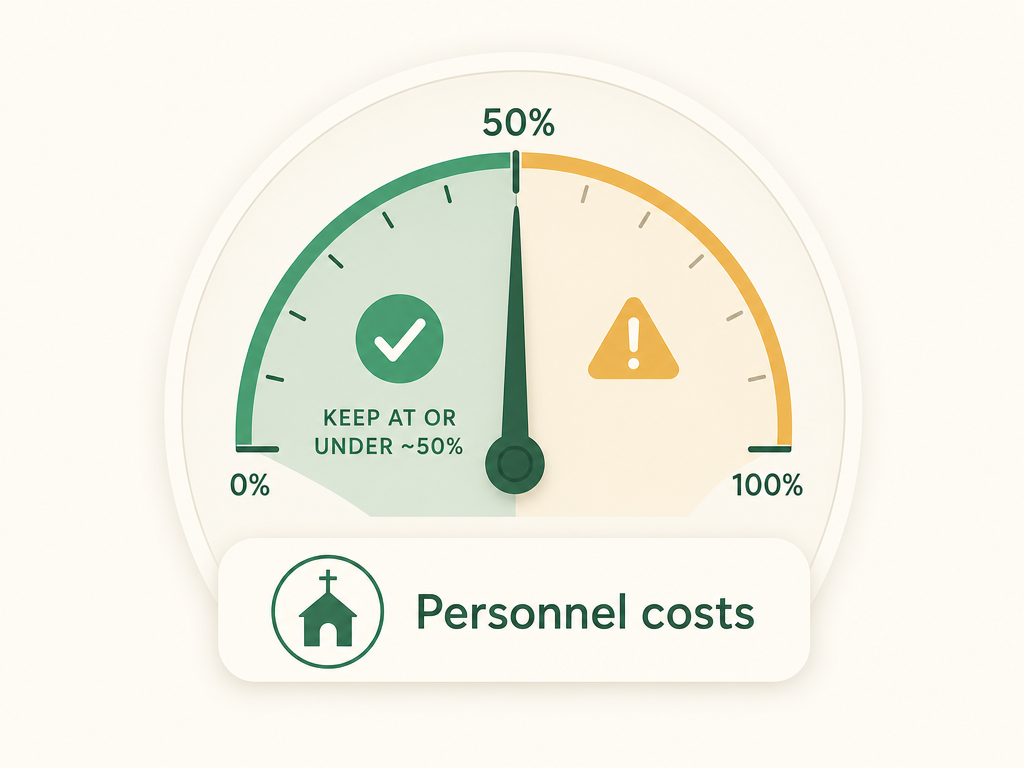
Personnel is almost always a church’s biggest expense, and the under-50% guideline exists because staff costs are fixed — they don’t flex with a down giving year the way program spending does. When salaries creep past half the budget, a church loses the room to fund ministry and absorb a shortfall.
This is the same fragility behind the 80/20 giving pattern — concentrated income plus fixed staff costs is what turns a soft giving month into a crisis. Healthy churches keep personnel in range and hold real reserves.
The budget “rules” that don’t apply to churches
People searching for church budget percentages often land on personal-finance rules. They’re useful for a household, but they’re not church budgeting:
- 50/30/20 — needs / wants / savings, for a personal budget (Investopedia). A church has no “wants” line.
- 70-10-10-10 — a personal take-home-pay split. Not a ministry budget.
- 3-3-3 — a personal-finance habit, unrelated to church finance.
A church budgets by function and ministry priority, not by a one-size personal formula.
How to set your church’s percentages
Start from the ranges above — or plug your income into the church budget calculator — then adjust for your church’s stage and calling. A young church plant may run lean on facilities and heavy on outreach; an established church with a building carries more in facilities and staff. Set the split deliberately against your priorities, then watch it on the church statement of activities through the year — the goal is a budget that funds the mission and survives a slow giving season.
Vestrybooks tracks spending by category as it happens, so you can see your real percentages against plan at any point in the year — not just guess at year-end. See plans →
FAQ
What percentage of a church budget should go to salaries? Commonly 45–55%, with advisors recommending personnel stay at or under about half so fixed staff costs don’t crowd out ministry or reserves.
What is the 70-10-10-10 budget rule? A personal-finance split of take-home pay (living / giving / saving / debt). It’s for households, not church budgets.
What is the 80/20 rule in churches? The observation that roughly 80% of giving comes from about 20% of givers — a reason to budget income conservatively and hold reserves.
Is there a required church budget percentage? No. The IRS sets no split; these are guidelines. Each church sets its own percentages around its ministry priorities.
This is general information, not financial advice — set your church’s budget with its leadership and a qualified advisor.
This article is general information for church treasurers, not professional tax or legal advice. For your church's situation, consult a qualified accountant or attorney.
Church accounting a volunteer can actually do.
Vestrybooks is church accounting + giving for the volunteer treasurer — fund tracking, one-click year-end statements, and online giving with $0 taken from every gift.
A real free plan · no credit card · your data stays yours