Blog · Church taxes
Do churches pay property taxes?
June 27, 2026 · By Benjamin Reinke
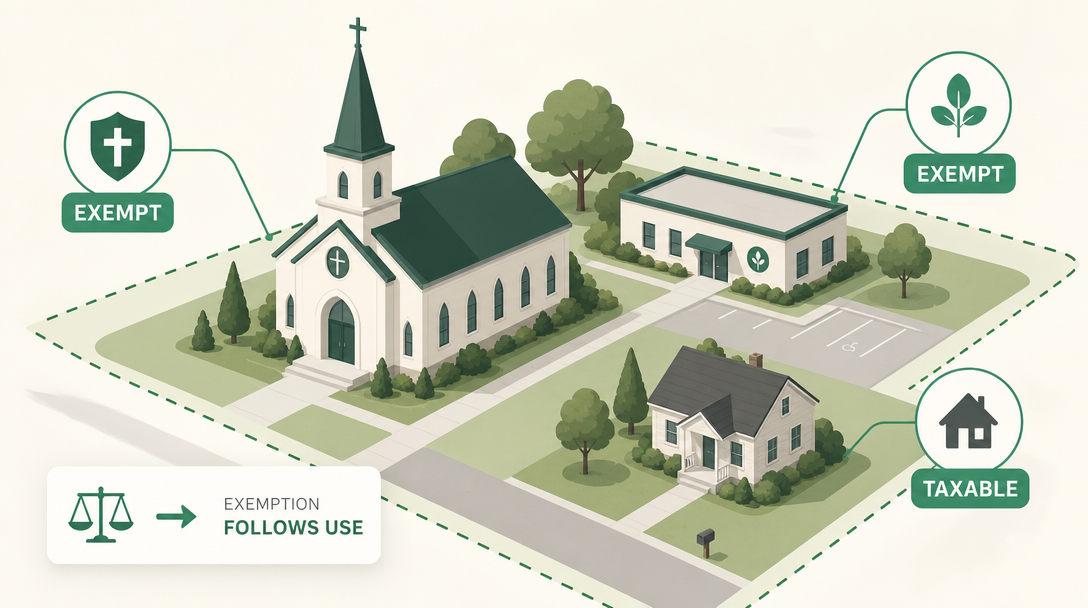
Short answer: Usually not — most states exempt church property that’s used for religious purposes (the sanctuary, offices, classrooms) from property tax. But property tax is a state and local matter, not federal — separate from a church’s federal tax-exempt status — so the rules and the application process vary by state, and the exemption usually isn’t automatic. Property a church owns but doesn’t use for ministry — a rental house, a commercial space, vacant land held as an investment — can still be taxed.
The general rule: religious-use property is exempt
Property tax is administered by states and counties, and nearly every state exempts real estate owned and used by a church for religious worship and ministry. That covers the building you worship in, the church offices, and education space. Unlike the church’s federal income-tax exemption, which is automatic (IRS Publication 1828), the property-tax exemption is granted under state law — so the details depend on where your church is.
It usually isn’t automatic — you apply
In most states a church has to file for the exemption with the county assessor, not just assume it. The application typically asks the church to show it owns the property and uses it for exempt religious purposes. Miss the filing, or let it lapse, and a church can get a property-tax bill it didn’t expect. Keep the exemption paperwork with your records and renew it when your state requires.
What property is not exempt
The exemption follows use, not ownership — so a church can owe property tax on real estate that isn’t used for ministry:
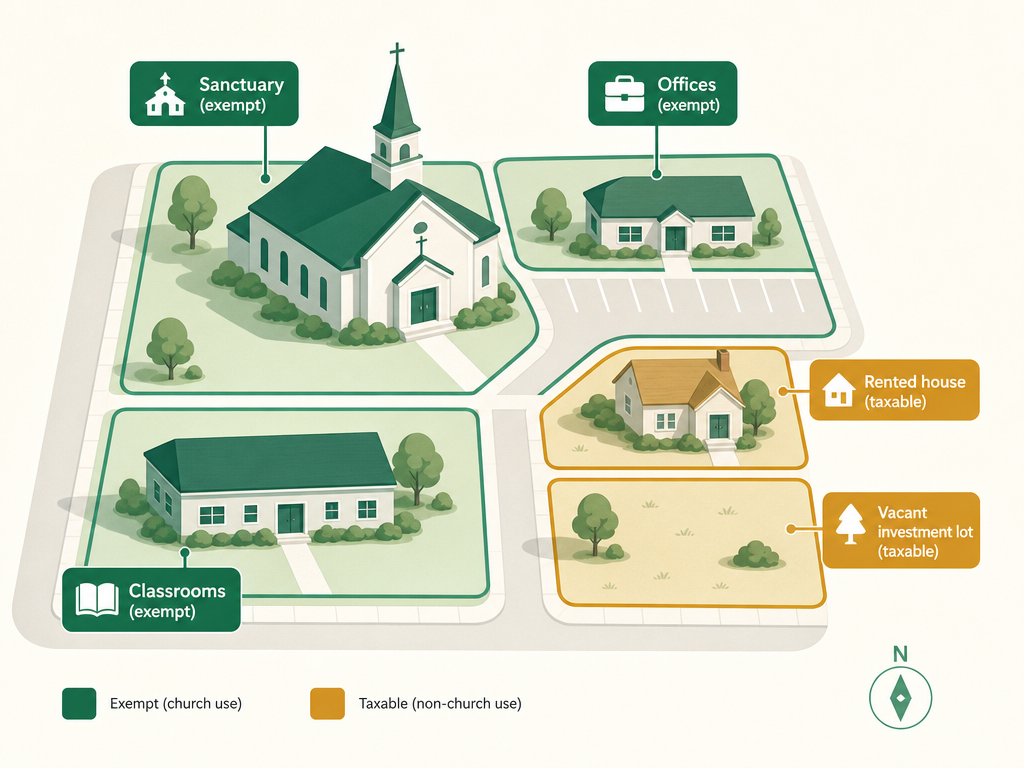
- Rented or commercial property — a house or storefront the church rents out for income.
- Vacant land held as an investment rather than for a planned ministry use.
- Mixed-use property, where only the ministry-used portion qualifies in some states.
- A parsonage is exempt in many states but not all, and sometimes only up to a value limit — another state-by-state detail.
How to keep the exemption
To hold the exemption, a church generally needs to keep the property in genuine religious use, file or renew the exemption as the state requires, and be ready to document that use if the assessor asks. If your church starts renting out part of a building, check with the county — that portion may become taxable.
Why church property tax varies by state
Because there’s no federal property tax, there’s no single national rule — fifty states each set their own religious-property exemption, application process, and treatment of parsonages and rentals. So the honest answer to “do churches pay property taxes” is: usually not on ministry space, sometimes on everything else, and you should confirm with your local assessor.
Vestrybooks keeps a church’s property, rental income, and fund records organized, so it’s clear which holdings are ministry-use and which might be taxable. See plans →
FAQ
Do US churches pay property taxes? Generally not on property used for religious purposes, which most states exempt — but property tax is state-administered, the exemption usually requires an application, and non-ministry property can be taxed.
Is a parsonage exempt from property tax? In many states yes, but not all, and sometimes only up to a value limit. It’s a state-by-state rule — check your county assessor.
Can a church owe property tax? Yes — on property it doesn’t use for ministry, such as a rental house, commercial space, or vacant investment land, and anywhere it failed to file for the exemption.
Is the property-tax exemption automatic? Usually not. Unlike the federal income-tax exemption, a church typically has to apply for the property-tax exemption with its local assessor and renew it as required.
This is general information, not tax or legal advice — property-tax rules vary by state, so confirm with your county assessor or a qualified professional.
This article is general information for church treasurers, not professional tax or legal advice. For your church's situation, consult a qualified accountant or attorney.
Church accounting a volunteer can actually do.
Vestrybooks is church accounting + giving for the volunteer treasurer — fund tracking, one-click year-end statements, and online giving with $0 taken from every gift.
A real free plan · no credit card · your data stays yours