Blog · Fund accounting
Church designated funds, explained without the fear
June 26, 2026 · By Benjamin Reinke

Short answer: A designated fund is money your church’s own leadership sets aside for a specific purpose — a van, youth camp, a memorial gift. Because the church created the designation, the board can usually undo it. That’s the key difference from a donor-restricted gift, which the donor restricted and you’re bound to honor. The two real risks: letting designated funds pile up unused, and accidentally creating a gift the IRS won’t let the donor deduct. Both are easy to avoid once you see them.
What “designated” actually means
In church fund accounting, money carries a purpose. A designated fund is one where the church itself assigned that purpose: the board votes to set aside $5,000 toward a new van, or members give to a “youth camp fund” the church announced. The money is earmarked, but the church is the one who earmarked it.
That matters because of who controls it.
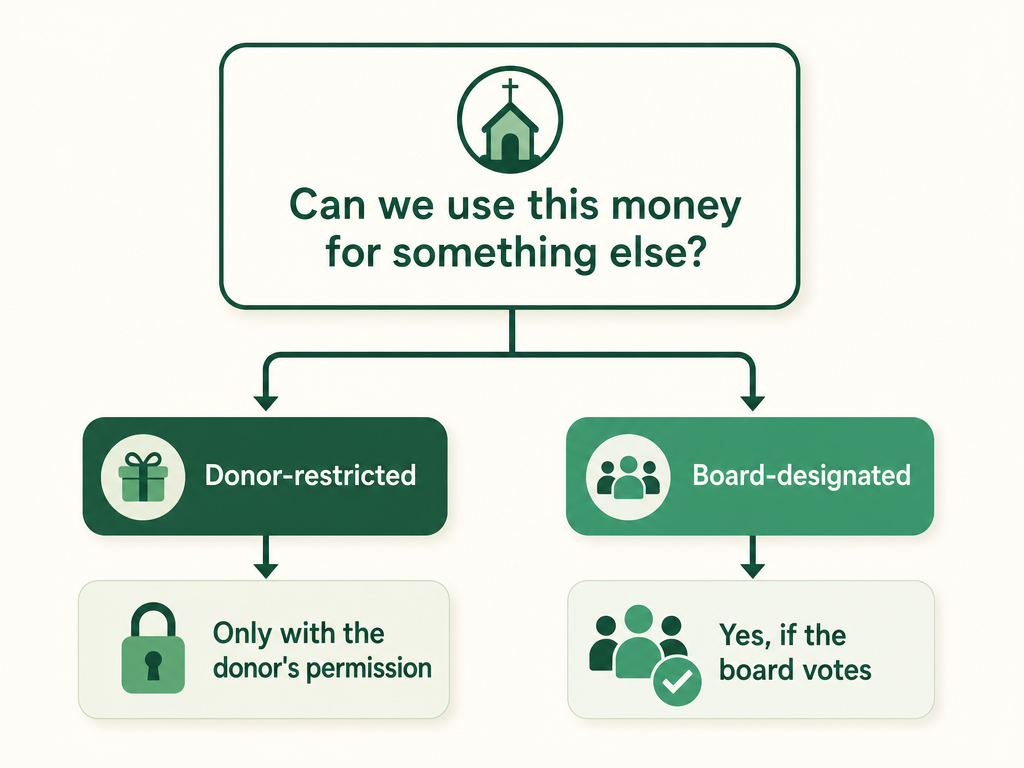
Designated vs. restricted — the line that protects you
- A board-designated fund is your church’s internal plan. The board set it aside, and the board can later vote to un-designate or redirect it. There’s no outside legal restriction.
- A donor-restricted fund is restricted by the giver. When a donor specifies a purpose, you’re legally and ethically bound to use the gift for it. You can’t quietly move it somewhere else.
The grey area is when the church announces a purpose (“give to our building fund”) and donors give to it. Those gifts can take on a donor restriction in the donor’s eyes. The fix is a short, written fund policy that says: gifts to a designated purpose are appreciated, and if that purpose is fully met or abandoned, the church may redirect the remaining funds to a similar ministry use. State it on your giving page and your giving envelopes, and you keep flexibility while being honest with donors.
Can a church use designated funds for something else?
- Board-designated: yes — the body that designated it can re-designate it, ideally with a recorded board vote.
- Donor-restricted: generally no, not without the donor’s permission. If the purpose has become impossible (the project was cancelled), contact the donors; for large or endowment-level gifts, get legal advice before redirecting.
When in doubt, the safe move is a quick conversation with the donor and a note in the minutes. It costs ten minutes and prevents a trust problem.
The IRS trap: gifts earmarked for a person
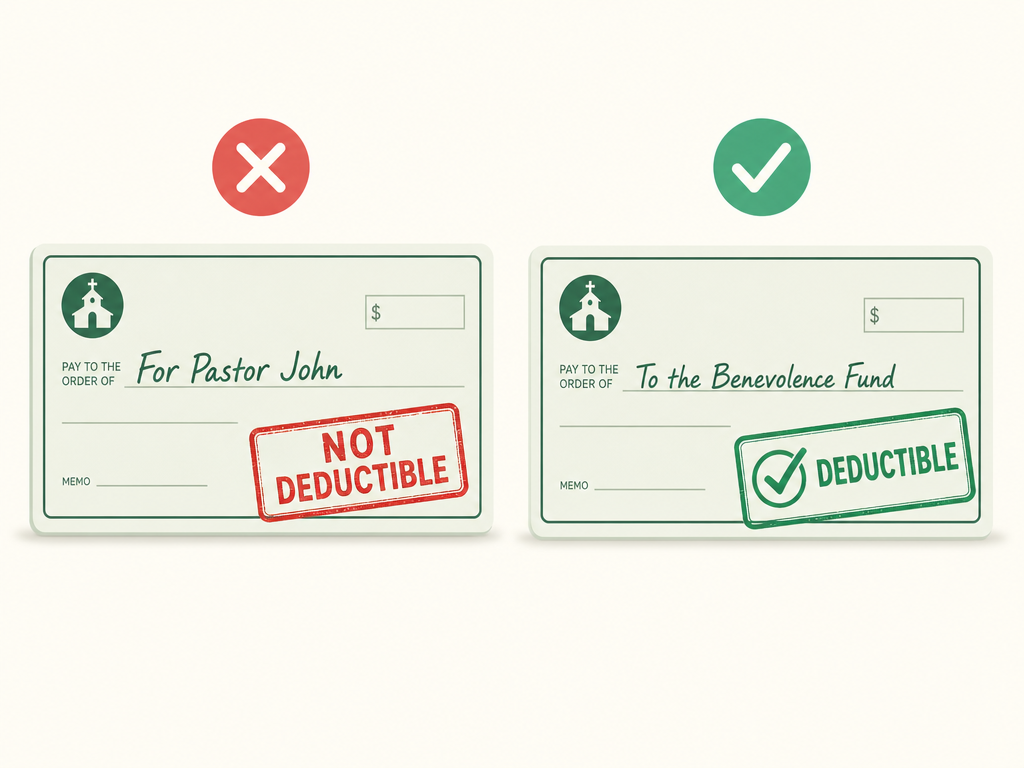
Earmarking a gift for a specific person is the trap most church content skips, and it bites churches every year. A contribution earmarked by the donor for a specific individual is not tax-deductible — even if it runs through the church’s books. If a member writes “for Pastor John” or “for the Smith family’s medical bills” on a check, that’s a gift to a person, not a deductible gift to the church (IRS Publication 526, Charitable Contributions).
To keep benevolence and designated gifts deductible, the church must keep full control and discretion over how the money is used. Practically: donors can give toward the benevolence fund or a need, but the church — not the donor — decides who receives help. Put that in your benevolence policy, and don’t issue deductible receipts for person-earmarked gifts.
The other danger: funds that pile up
Designated funds quietly accumulate. A memorial gift from 2019 still sits untouched; a “missions trip” fund outlived the trip. Untracked, they distort your real available cash and frustrate donors who expected their gift to do something.
A simple discipline fixes it: review designated fund balances at least once a year, ask “is this still its purpose?”, and either spend it, or have the board formally redirect it under your fund policy.
How to track designated funds well
- Create a fund only for a real, ongoing purpose — not a fund per gift. A “memorial fund” beats twelve named-person funds.
- Tag every gift and expense to its fund, so each has a running balance.
- Report fund balances to the board regularly, so nothing hides.
- Keep the policy visible — on giving forms and your site — so designations are clear from the start.
Vestrybooks makes this the easy path: designated funds are dropdown choices, every gift and expense is tagged automatically, and the board sees each fund’s balance without anyone building a spreadsheet. See plans →
FAQ
What is the difference between a restricted and a designated fund? A restricted fund is restricted by the donor — you must honor their purpose. A designated fund is set aside by the church’s own board, which can later redirect it.
Can a church legally move money out of a designated fund? If the church designated it, the board can re-designate it (record the vote). If a donor restricted it, you generally need the donor’s permission.
Are designated gifts to my church tax-deductible? Gifts toward a church-controlled purpose are deductible. Gifts earmarked for a specific person are not — the church must keep discretion over the money for it to count.
How many designated funds should a church have? As few as cover your real purposes. A handful of clear funds is far healthier than dozens nobody reconciles.
This article is general information for church treasurers, not professional tax or legal advice. For your church's situation, consult a qualified accountant or attorney.
Track every fund the easy way.
Vestrybooks does real fund accounting in plain language — pick a fund, and restricted gifts stay separate automatically, across every account and card.
A real free plan · no credit card · your data stays yours