Blog · Payroll & clergy taxes
Ministers opting out of Social Security: Form 4361
June 26, 2026 · By Benjamin Reinke
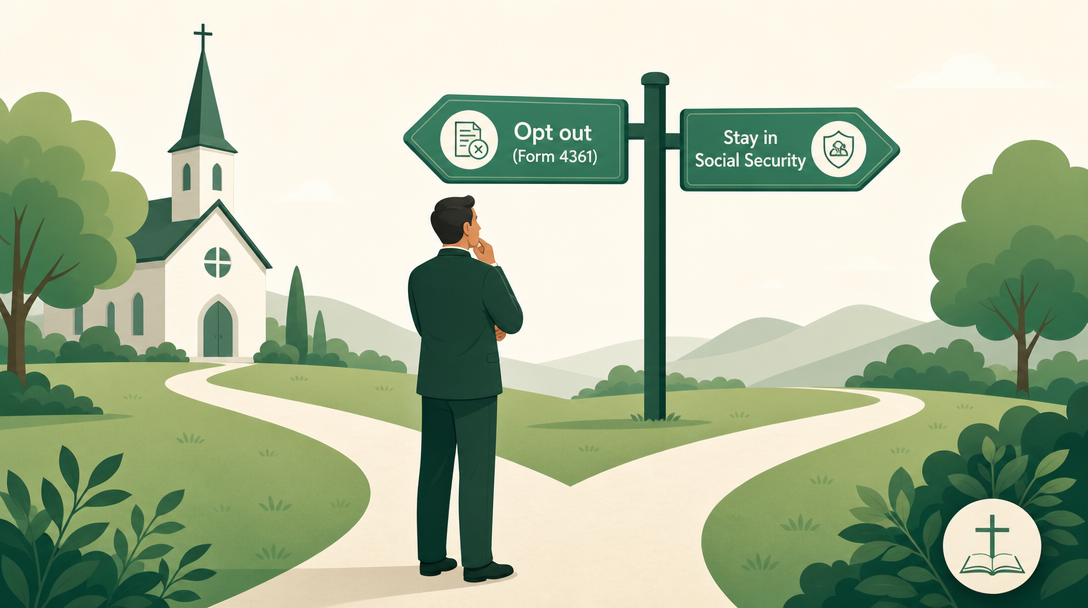
Short answer: A minister can opt out of Social Security on ministerial earnings by filing IRS Form 4361 — but only on the basis of a genuine religious or conscientious objection to public insurance, not to save money. The exemption is permanent and irreversible, and it gives up Social Security retirement, disability, and survivor benefits plus Medicare on that income, so the minister has to self-fund all of it. Most advisors say don’t, unless the objection is sincere.
Who can opt out of Social Security (and who can’t)
Only an ordained, licensed, or commissioned minister who is conscientiously or religiously opposed to accepting public insurance for their ministerial work can opt out. The objection must be religious, not economic — “I’d rather invest the money myself” is not a valid basis, and the IRS asks the minister to certify that (IRS: About Form 4361). Secular jobs are unaffected: a minister who opts out still pays into Social Security on any non-ministerial work.
How to opt out: Form 4361 and the deadline
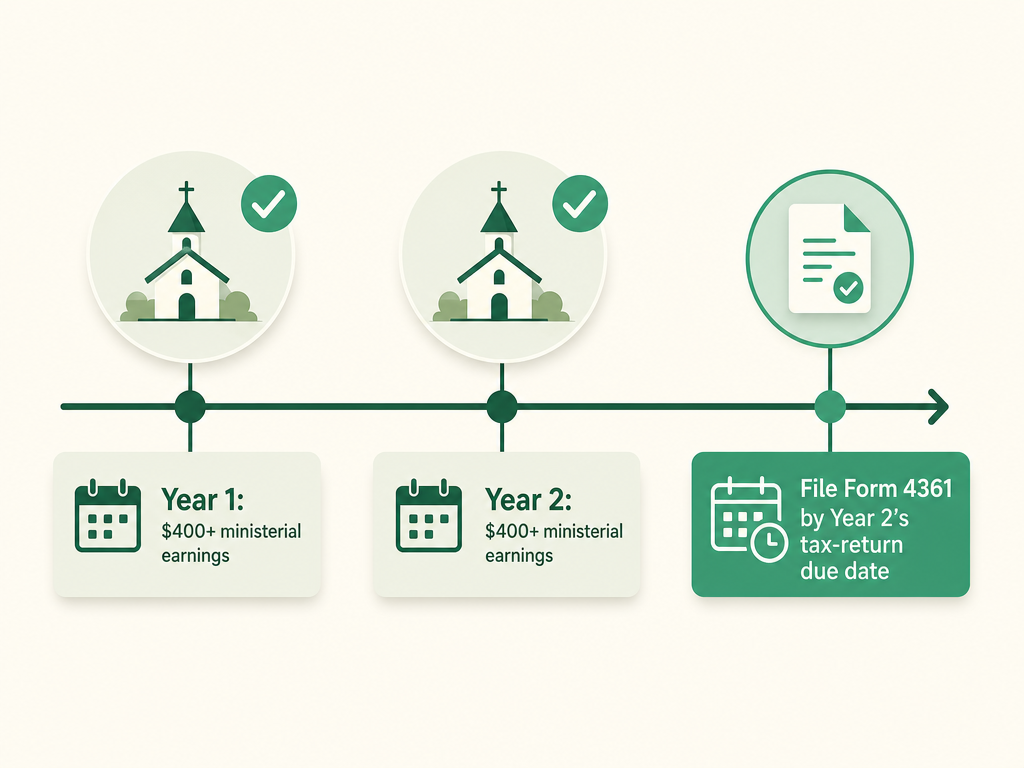
Opting out is done by filing Form 4361, and the deadline is strict: it’s due by the due date (including extensions) of the tax return for the second year in which the minister had $400 or more of net earnings from ministerial services. Miss that window and the chance is gone. The IRS reviews the application, may confirm the minister understands it’s a religious objection, and returns an approved copy — which the minister must keep permanently.
What ministers give up by opting out
Opting out forfeits a lot, and only on ministerial income:
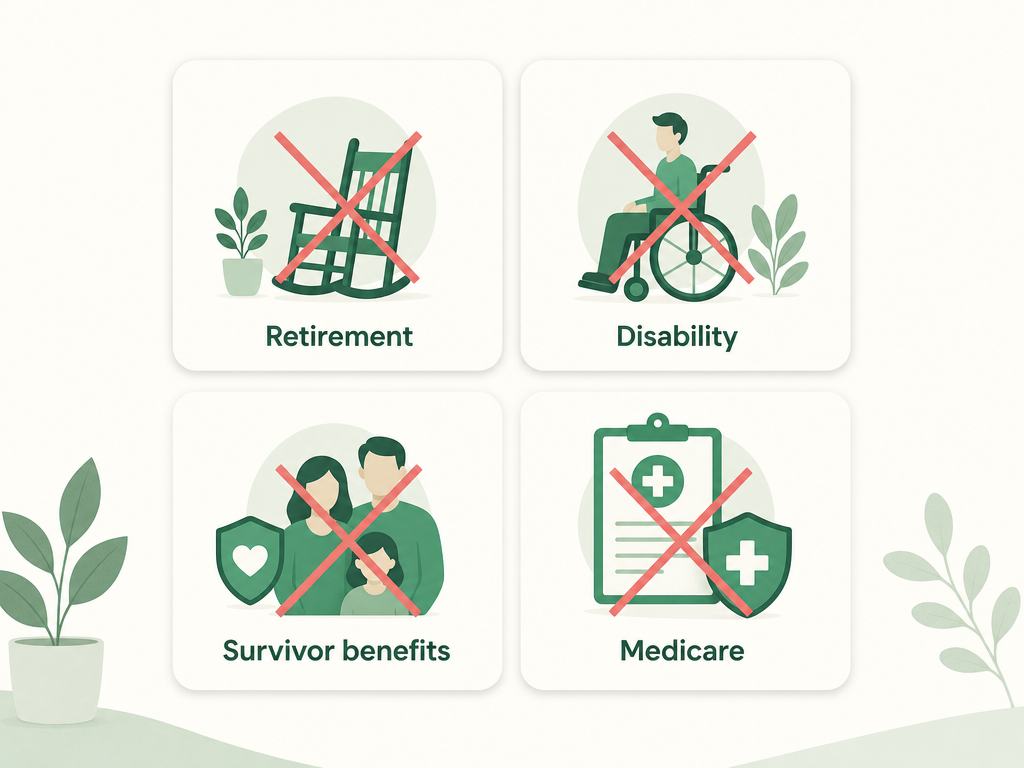
- Retirement benefits on that income
- Disability coverage if the minister can’t work
- Survivor benefits for a spouse and children
- Medicare eligibility based on that income
A minister who opts out must replace every one of these — funding their own retirement, buying private disability and life insurance, and planning for Medicare (often through a spouse’s record or secular work).
Why some ministers opt out — and the Dave Ramsey warning
The appeal is keeping the 15.3% self-employment tax that hits a minister’s salary and housing allowance, and investing it personally — the clergy self-employment tax calculator shows what that yearly amount looks like. Even Dave Ramsey’s position comes with a warning: opting out can work only if the minister genuinely invests the difference every year and separately covers disability and life insurance — and his caution is that most people don’t actually do it, leaving them exposed. The financial upside is real on paper but fragile in practice, and it isn’t a legal reason to opt out in the first place.
Can a minister opt back into Social Security?
Opting out is generally permanent — once Form 4361 is approved, a minister can’t simply opt back in. Congress has occasionally proposed limited windows to rejoin, but those are proposals, not standing law, so a minister should treat the decision as final.
Vestrybooks handles the church’s books and clergy pay records, so the numbers behind these decisions are always clear — but a choice this permanent deserves a qualified tax advisor. See plans →
FAQ
Why do ministers opt out of Social Security? Most who do cite a religious objection to public insurance; some are drawn to keeping the 15.3% tax. Only the religious objection is a valid legal basis.
How long do pastors have to opt out of Social Security? Until the due date (with extensions) of the tax return for the second year they earn $400 or more from ministerial services.
What is Dave Ramsey’s warning on opting out? That it only pays off if you actually invest the saved tax and buy your own disability and life insurance — and most people don’t, so they end up worse off.
Can a minister reverse opting out of Social Security? No — an approved Form 4361 is effectively permanent. Proposals to allow opting back in have not become law.
This article is general information for church treasurers, not professional tax or legal advice. For your church's situation, consult a qualified accountant or attorney.
Church accounting a volunteer can actually do.
Vestrybooks is church accounting + giving for the volunteer treasurer — fund tracking, one-click year-end statements, and online giving with $0 taken from every gift.
A real free plan · no credit card · your data stays yours